but I appreciate it. It's a place to hold my thoughts to find later.
When I don't pour them into something, they mist away.
and your comments (especially those kindreds that find this a place
to connect with me) mean a lot to me.
But if anyone prefers, I'm gonna start doing this on tumblr too...
maybe even switch completely over to tumblr bc I like the aesthetic more
and I found a widget that sucks all your blogspot posts into a tumblr automatically.
(http://jonnytran.tumblr.com/post/221876842/import-blogger-posts-to-your-tumblr)
http://thewaterisblack.tumblr.com/
just saying. just staying. just swaying.
jedidiah.
Monday, September 5, 2011

Back to (the wrong) school

From Seth Godin:
A hundred and fifty years ago, adults were incensed about child labor. Low-wage kids were taking jobs away from hard-working adults.
Sure, there was some moral outrage at seven-year olds losing fingers and being abused at work, but the economic rationale was paramount. Factory owners insisted that losing child workers would be catastrophic to their industries and fought hard to keep the kids at work--they said they couldn't afford to hire adults. It wasn't until 1918 that nationwide compulsory education was in place.
Part of the rationale to sell this major transformation to industrialists was that educated kids would actually become more compliant and productive workers. Our current system of teaching kids to sit in straight rows and obey instructions isn't a coincidence--it was an investment in our economic future. The plan: trade short-term child labor wages for longer-term productivity by giving kids a head start in doing what they're told.
Large-scale education was never about teaching kids or creating scholars. It was invented to churn out adults who worked well within the system.
Of course, it worked. Several generations of productive, fully employed workers followed. But now?
Nobel-prize winning economist Michael Spence makes this really clear: there are tradable jobs (making things that could be made somewhere else, like building cars, designing chairs and answering the phone) and non-tradable jobs (like mowing the lawn or cooking burgers). Is there any question that the first kind of job is worth keeping in our economy?
Alas, Spence reports that from 1990 to 2008, the US economy added only 600,000 tradable jobs.
If you do a job where someone tells you exactly what to do, they will find someone cheaper than you to do it. And yet our schools are churning out kids who are stuck looking for jobs where the boss tells them exactly what to do.
Do you see the disconnect here? Every year, we churn out millions of of worker who are trained to do 1925 labor.
The bargain (take kids out of work so we can teach them to become better factory workers) has set us on a race to the bottom. Some argue we ought to become the cheaper, easier country for sourcing cheap, compliant workers who do what they're told. We will lose that race whether we win it or not. The bottom is not a good place to be, even if you're capable of getting there.
As we get ready for the 93rd year of universal public education, here’s the question every parent and taxpayer needs to wrestle with: Are we going to applaud, push or even permit our schools (including most of the private ones) to continue the safe but ultimately doomed strategy of churning out predictable, testable and mediocre factory-workers?
As long as we embrace (or even accept) standardized testing, fear of science, little attempt at teaching leadership and most of all, the bureaucratic imperative to turn education into a factory itself, we’re in big trouble.
The post-industrial revolution is here. Do you care enough to teach your kids to take advantage of it?
Saturday, September 3, 2011
sister island

I sit beside my sister today, she is fresh home,
and grasp a gift of adulthood.
When you see the woman as you see the stranger,
studied for what she is, her face a unique mystery
of shape and familiar structure. I see my face in hers,
and I see a face that is new to me.
and so I put on the shelf of nostalgia
the bundle of inconveniences,
as children see their siblings, as only in relation to them.
And I see her for what she is, or at least partly.
What a wonderful gift of age and distance.
Friday, September 2, 2011
Promise to wake me up

If you catch me with blood on my hands,
when I am forty,
with a cul-de-sac comforter
and plenty of soft and malleable money in the bank,
If you catch me with blood on my hands,
because my heart has hardened to the softness of empathy,
and my cage is not the earth and the handiwork of G-d
but rather the ends
of my real.estate.
If you catch me with blood on my hands,
please come to my gilded door,
and throw red paint on it.
but first knock,
so that if I'm home
and if I can pull myself up off the leather couch,
you may paint me as well.
Thursday, September 1, 2011

Tuesday, August 30, 2011
Mark this well, you proud men of action!

I am reading the biography of John Adams, and feel somehow kindred. Perhaps that is bold and silly to say, but we grow only as we believe we grow, and we are fashioned by our heroes.
Yesterday Jason, Ben, Laren, Chris, Zach, Kimmy and I sat around a lunch table by the ocean for 5 hours discussing the world we want to see in 100 years. And how that hundred year vision could be wrought in some small way in the spring of 2012.
"Intention is everything" as Jason has become fond of saying. And he is right. We must unscale our eyes from the lies of what is, and see what could be. And not wait, but build such a nation now. As Gandhi took to the sea to make his own salt. As Adams and Washington and Hamilton and Jefferson sparred over old and new ideas become one.
All this talk of principles and vision makes my eyes glaze over. I start to lose the forest for the thickness of the brush. But then, as Steinbeck says, the black reasoning comes to me in the morning.
I am utterly convinced that in 100 years, the current use of free market capitalism and the abuse of natural resources in the worship of growth will be looked upon with the same disgust as we now see the economy of slavery.
Not because capitalism is wrong, but because it's lordship is endowed by a fiction: namely that growth is success.
But despair is not my motif. One thing I love about capitalism is that it is mindless, and therefore will not be offended when it is replaced with a sustainable and downstream logical framework. Even the most hardcore of free market lovers knows that when resources become scarce to a degree of danger, we will adapt. And perhaps this is still Capitalism... for when it changes to the will of the people, it will have done what it always promised: to blindly reflect the freedom of individual choice.
I only mourn the smallness of the massive mind to count the cost of what is lost as the dumb fat worm chews the stalk that holds it up. Jeremy Rifkin believes we may already be too late. God stands above us and winces, though he wrote this play. Take heart.
I am fired up because I read this > http://www.organicconsumers.org/btc/berry.cfm
Wednesday, August 24, 2011
Talk is sound

Like 'the free market is the answer. If you take away people's money, they won't have incentive to work hard, and besides, if the government can't spend money responsibly, why would we give it to them.'
or
'the rich are poisonous vacuums that hoard and support a wealth gap that suffocates the poor in an endless cycle.. until the gap is so severe that the poor rise up, overthrow the aristocracy, and redistribute by force.'
and so we get the endless unconstructive cycle of debate that gives shape to partisanship and stagnation.
This same calcification of thought, i.e. the exchange of holistic understanding for informative cherry picking, is not just seen in politics. It is seen in religion. It is seen in family history and the disappointments of family. It is why we stay angry at a sibling for years, or our mother, or a friend. It is why we stop asking questions in our twenties and hang like weak handed children to a few facts that sound right in a dinner argument.
What if we clung to the first and second commandments of Jesus? That alone is a life's work. Instead we cling to Ayn Rand or John Piper.
I'm speaking out of both sides of my mouth.
Because I believe people cling to two types of simple things.
1. Simple fragments of truth that make men fools. These are used as weapons to maintain a status as 'right.'
2. Simple foundations of truth that make men great. These are used as quiet humble fuel for action and example.
All this talk engages me, challenges me to take part in the constructive dialogue (if it exists) of building a better future... because the founding fathers of America believed that ideas could change the system, and they did.
I also believe this to be true:
“Mark this well, you proud men of action! You are, after all, nothing but unconscious instruments of the men of thought.” – Georg Wilhelm Friedrich Hegel.
And so I think.
But I get tired...
and see great merit in leaving my hat on a hook at the front door, stepping out of my living room, and living amongst the real problems of real people.
Friday, August 19, 2011
Thoughts on the Fourth Estate and my time in an RV that followed.

How do you digest a hurricane? How do you swallow the moon and the earth lit up by the moon? Some things are too big, too inextricably bound up in the world to be consumed. I want to know The Fourth Estate. A conference designed to spark an ideological movement: a commitment to global citizenship and responsibility to justice. I want to analyze and categorize it. But it cannot be held in my hands because there were too many miracles in the orchestra to hold.
Each individual experience, the unique events of every life and the wash of one video on one pair of eyes and a speaker’s words on another. I will never know the stories, the ruffles of the heart that were the very moment of a life change, or the seed falling in the crack of stone, invisible for years, only to grow into a mighty tree in years I will not know.
I held the face of new loves, cried with them as we said goodbye, I hugged a million works of art and wrote my name in books that will hold the words of great men and women not yet written.
I spoke with my heroes, listened to them address and articulate a future and a present and the human condition.
I heard great minds give credit to science for life, to God, to something more but not quite God. Each man, each woman bringing her motivation, the deeper hunger, to the stage, inviting each member of The Fourth Estate to take the wild wonderous magic of living seriously, the profound duty to examine the phenomenon of existence and behave with intention. Intention is everything.
If these members walked out a bit dizzy, stumbling over thoughts too big for the brain, we have done our job. If these members walked out convinced of nothing except the dignity of human beings and a desire to protect that dignity, then we have done our job.
If these members exchange self-serving profit for life-serving purpose, if they see their lives as part of a living body, and not an ignorant cancer, we have done our job.
If we prioritize worthy things, and marginalize unworthy things. If we celebrate beauty and mystery and belonging, and if we critique abuse, the rape of the human soul and the natural world, the fragmented fiction that my choices are separate from yours… then we have done our job.
If we stop blaming injustice on laziness, culture, and history, and start solving injustice with love and focused attention, then we have done our world a service.
And if there is a God, He will be well pleased.
As I traveled the east coast in an RV, celebrating Brady’s bar exam, exploring the Carolina’s and sitting at Lincoln’s feet in DC and walking the streets of New York with Orion (a fresh poet’s eyes seeing the temple of man for the first time), I carried with me the glory of The Fourth Estate. The sense of purpose, the crater of impact scarring my face and shoulders with value. It was a haunted drive, my thoughts present in the Charleston rain and above the clouds in the lingering ghosts of the prior week. It was the perfect meal: swallowing the moon with brothers of chosen blood and adventure, digesting the hurricane that circles inside me, wrecks the islands of doubt and rests its quiet eye over my heart.
Thursday, July 21, 2011
If there is one thing

it is belief.
or said differently: hope.
it is hardly evidence. hardly even experience.
Belief is why we wake up everyday, the hope of some good outcome, prolonged or immediate,
it is why we enjoy meeting new attractive people, if we are single or not single,
it is why we so easily remember their names and forget the names of plane looking people,
that some unsaid unimagined unthought connection will grow into something unthought
but always imagined,
or it is why we make status updates: the hope of being noticed and affirmed
it is why we blog: the hope of being read, and someone finding the
tiny personal single life we live to be, in some small way, important,
which of course to us is hugely important,
even if no one ever ever reads it, or we get the rare affirmation,
that one affirmation gives birth, sets free, our lustful imagination
for all that could be reading it.
or even our journals, those secret things that shall never be read,
how few of us would burn those books,
how few of us write to write,
without the hope that someone in the future might stumble across it
and find that we said something,
or even the sexy thought that someone has found us interesting
and tip-toed into our room, glanced over their shoulder,
and read without us knowing.
and in so hoping, we bait hope for hope,
if we win, and someone does affirm us or notice we are breathing,
they too are hoping, they are attracted to us and want to understand,
to consume and be better,
or to know us, study us, grasp us, and win us. It is an exchange, and when even
it is perhaps what Love is, a type of Love, but it is
not always even... and so we find unrequited hope, which is heartbreak, which
is defeated belief.
I believe humans hope for such things, because we are unfulfilled
and therefore hungry. We hope for dinner and hope for a spouse and
hope for children and hope to retire and hope our children love us and hope
to make them love us right and hope to be healthy and hope for heaven so that
we have something else to hope for when what we hoped for wasn't what we wanted
and then we grow tired, and the desire starts to be tired, and we stop laughing,
and so many lose their faces.
I sound like I'm critiquing. But the alternative is nirvana, freedom from desire,
which of course is death. Hope is what living is.
Hope can sound an empty common word,
but it seems so much more real than most things I hear of Love.
Wednesday, July 20, 2011
This is what I'm writing for work. It is the manifesto for an ideological movement of citizenship and global identity.


Every generation is invited to endow its share of history with a name. It begins with recognition. If the events of the day are marked by a growing contrast: the comfort of some is removed by a widening chasm from the tragedy of many, and the voices of the dying are hushed by the hands of the wicked, such a day is set to end.
This recognition is followed by response. First, by bold symbolic action, usually by the young.
Then, in the audience of the effected, a proper articulation of the problem emerges. Then a movement of change, often sweeping so quickly the Establishment fumbles to trace it.
We are at such a time.
The Fourth Estate is a recognition of human identity in the face of global connectivity and the responsibility that flows from it. It is a blueprint of the future founded in humanity's bold endeavor to seek a more perfect peace, a more perfect unity, and a more honest expression of success.
We have always experienced empathy for our neighbor, our family. In a novel age such as this where the stories and faces of humanity writ large are brought to our living rooms, our eyes and our ears, and what's more: our products and consumption touch the globe as a whole: this empathic responsibility has outgrown its ancient limits of proximity.
It is a coalition of minds that believe there are no national boundaries, no laws, no man made rules that trump the law of common humanity written on the heart. It is not something new, it is the proper expansion of something old, truths that are self evident, God-breathed, and manifest in the history of discontent:
We believe all men are created equal, and that justice for some is not justice for all. We believe that human evil is the responsibility of all men. When we turn our face from horror, we bless it to continue. We believe our task is to live the simple and true things, and work them out no matter how hard: that men and women, no matter where they live, are equal. and loved. and worthy. and that we are all connected, not just in a complicated global exchange of goods and commodities, which is undeniable, but in a human web of innate value.
And these things define us: We are not the intellectual elite. We are not the bored idealists in the lounge chairs of comfort. We are the young people on the sidewalk. We will sleep where we fall and work until our hands are raw, connected like never before to the central nervous system of mankind.
In the face of a modern world that is inextricably connected in a web of exchange, we accept the responsibility to protect those that are victimized by extreme cases of injustice. It is not 'their' problem. It is a humanity problem.
We believe in starting with the specific to prove the universal. We are starting with Joseph Kony, the rebel leader of the Lord's Resistance Army that has systematically abducted children to fight as soldiers in his rebellion.
We will not ignore his murderous campaign simply because his escapades do not impact us economically or threaten us militarily. We will respond because he destroys human life.
And our responsibility to protect does not invalidate our national identity. We believe in the pride of cultural expression and society. But we do not believe in the fiction of self-interest in isolation. Our choices echo to every single corner of this globe, and we should respond with reason and temperance.
To the degree in which society denies the affect of its choices on its own citizens and those of its neighbors, is the degree it will fall victim to history as a failure. As a decaying monster.
It is about rejecting the concept of the 'other,' the belief that 'they' are the problem and 'they' are out to get us. We understand that 'they' are us, and we are 'them.'
When we acknowledge the mystery of value in every human life, and witness to such, we thrive, and succeed, and protect one another.
We choose to stand up for that belief. We will fight for it, expand our talent, exhaust our bodies in its pursuit, and define a generation of human belonging.
We are The Fourth Estate.
Truth is truth is truth

Playboy: Much of the controversy surrounding 2001 deals with the meaning of the metaphysical symbols that abound in the film — the polished black monoliths, the orbital conjunction of Earth, Moon and sun at each stage of the monoliths’ intervention in human destiny, the stunning final kaleidoscopic maelstrom of time and space that engulfs the surviving astronaut and sets the stage for his rebirth as a “star-child” drifting toward Earth in a translucent placenta. One critic even called 2001 “the first Nietzschean film,” contending that its essential theme is Nietzsche’s concept of man’s evolution from ape to human to superman. What was the metaphysical message of 2001?
Kubrick: It’s not a message that I ever intend to convey in words. 2001 is a nonverbal experience; out of two hours and 19 minutes of film, there are only a little less than 40 minutes of dialog. I tried to create a visual experience, one that bypasses verbalized pigeonholing and directly penetrates the subconscious with an emotional and philosophic content. To convolute McLuhan, in 2001 the message is the medium. I intended the film to be an intensely subjective experience that reaches the viewer at an inner level of consciousness, just as music does; to “explain” a Beethoven symphony would be to emasculate it by erecting an artificial barrier between conception and appreciation. You’re free to speculate as you wish about the philosophical and allegorical meaning of the film — and such speculation is one indication that it has succeeded in gripping the audience at a deep level — but I don’t want to spell out a verbal road map for 2001 that every viewer will feel obligated to pursue or else fear he’s missed the point. I think that if 2001 succeeds at all, it is in reaching a wide spectrum of people who would not often give a thought to man’s destiny, his role in the cosmos and his relationship to higher forms of life. But even in the case of someone who is highly intelligent, certain ideas found in 2001 would, if presented as abstractions, fall rather lifelessly and be automatically assigned to pat intellectual categories; experienced in a moving visual and emotional context, however, they can resonate within the deepest fibers of one’s being.
—Playboy’s interview with Stanley Kubrick in its entirety (1968)
Saturday, July 16, 2011
Wisdom from a sometimes hated man

"When people spend their own money on themselves, they are careful about how much they spend and about what they spend it on. If people spend their own money on others, they are careful about how much they spend, but not as careful about what they spend it on. If people spend other people’s money on themselves, they are not careful about how much they spend, but they are careful about what they spend it on. If people spend other people’s money on other people, they are not careful about the amount of money they spend, nor are they careful about what they spend it on. That is government.” - Donald Rumsfeld. Written in his private notes while Secretary of Defense.
This not only summarizes the psychology of government, it also describes man's general self-preservation and self-attention superseding all other understanding. We can only truly know our own needs. That is why we are commanded to 'love one another as we love ourselves.' There is no deeper love.
And if we find ourselves in such a state where our insecurities and self-hate act as the foundation of our identity, I'd argue that such a person is incapable of free and true love.
Friday, July 1, 2011
mingle with the truth. our feet know more than books. but books know more than self-promotion.

don't know about the hedonism of self discovery.
but know there is a truth to rejecting the path of least resistance.
resistance is the only reason man has muscle.
- Kalle Lasn
Sunday, June 26, 2011
We’re giving away husbands on a game show.

“I know many people are concerned about the destruction of the sanctity of marriage, as well, and they view this as a threat. But let me ask you something, ladies and gentlemen, what are we really protecting when you look at the divorce rate in our society? Turn on the television. We have a wedding channel on cable TV devoted to the behavior of people on their way to the altar. They spend billions of dollars, behave in the most appalling way, all in an effort to be princess for a day. You don’t have cable television? Put on network TV. We’re giving away husbands on a game show. You can watch “The Bachelor,” where 30 desperate women will compete to marry a 40-year-old man who has never been able to maintain a decent relationship in his life. We have “The Bacholorette,” in reverse. And my favorite show, which thank God only ran one season because it was truly distasteful, was “The Littlest Groom,” where 30 desperate women competed to marry a dwarf. That’s what we’ve done to marriage in America, where young women are socialized from the time they’re five years old to think of being nothing but a bride. They plan every day what they’ll wear, how they’ll look, the invitations, the whole bit. They don’t spend five minutes thinking about what it means to be a wife. People stand up there before God and man — even in Senator Diaz’s church — they swear to love, honor, and obey; they don’t mean a word of it. So if there’s anything wrong, any threat to the sanctity of marriage in America, it comes from those of us who have the privilege and the right, and we have abused it for decades.”
NY Senator Diane Savino
Thursday, June 23, 2011
A post. a window.


I wanted to post two pages from my journal. one of the pages, because it was part of my shaken response to the death of my grandmother last summer and is honest. someone may find themself less alone in reading it. that is worth the exposure. and one, because it is what I want to be known if I died soon.
Wednesday, June 22, 2011
Reminds me of my friend Eric.

Who has not forgotten the sunset.
Have you ever seen
anything
in your life
more wonderful than the way the sun,
every evening,
relaxed and easy,
floats toward the horizon and into the clouds or the hills,
or the rumpled sea,
and is gone—
and how it slides again out of the blackness,
every morning,
on the other side of the world,
like a red flower streaming upward on its heavenly oils,
say, on a morning in early summer,
at its perfect imperial distance—
and have you ever felt for anything
such wild love—
do you think there is anywhere, in any language,
a word billowing enough
for the pleasure that fills you,
as the sun
reaches out,
as it warms you as you stand there,
empty-handed—
or have you too
turned from this world— or have you too
gone crazy
for power,
for things?
~ Mary Oliver
What does my life say?
From NPR:
To reclaim their “honor,” families in Syria have been known to kill raped female members. Even if families allow such women to live, they are not eligible to marry.
“We sat and discussed that we want to change this. We don’t want to change just the regime in Syria, but also this kind of stuff. So we will marry them in front of everyone,” said Ibrahim Kayyis, a 32-year-old baker from Jisr al-Shugour.
To do what is right at the expense of what is easy or socially acceptable is to the Glory of God.
Tuesday, June 14, 2011
They gave it a name.
 how many floating clouds of feeling
 are given words
by different cultures with different tongues
that value different things?
I've been looking for this word.
Thursday, June 9, 2011
You start.

"The chief Raoni cries when he learns that brazilian president Dilma released the beginning of construction of the hydroelectric plant of Belo Monte, even after tens of thousands of letters and emails addressed to her and which were ignored as the more than 600 000 signatures. That is, the death sentence of the peoples of Great Bend of the Xingu river is enacted. Belo Monte will inundate at least 400,000 hectares of forest, an area bigger than the Panama Canal, thus expelling 40,000 indigenous and local populations and destroying habitat valuable for many species - all to produce electricity at a high social, economic and environmental cost, which could easily be generated with greater investments in energy efficiency."
I am torn. By my life, the power to be one man, and the current of influence I may be a part of... for change, for fire, for busting down walls and ripping out the pillars of hungry made-up gods. I want to destroy factories, I want to sew something, I want to tell one person, look them in the eye, and say 'stop consuming so much. you are cancer.' And see the look on their face that says, 'you start.'
I believe in such cartography.

“We die containing a richness of lovers and tribes, tastes we have swallowed, bodies we have plunged into and swum up as if rivers of wisdom, characters we have climbed into as if trees, fears we have hidden in as if caves. I wish for all this to be marked on by body when I am dead. I believe in such cartography - to be marked by nature, not just to label ourselves on a map like the names of rich men and women on buildings. We are communal histories, communal books. We are not owned or monogamous in our taste or experience.”
—Michael Ondaatje | The English Patient
Being alone is first in being in love
““The capacity to be alone is the capacity to love. It may look paradoxical to you, but it is not. It is an existential truth: only those people who are capable of being alone are capable of love, of sharing, of going into the deepest core of the other person - without possessing the other, without becoming dependent on the other, without reducing the other to a thing, and without becoming addicted to the other. They allow the other absolute freedom, because they know that if the other leaves, they will be as happy as they are now. Their happiness cannot be taken by the other, because it is not given by the other.””
- Osho, Being In Love
- Osho, Being In Love
Wednesday, June 8, 2011

Tuesday, June 7, 2011
Thinking

genius is nothing more than continued attention,
I think that may be true.
I am possessed by desire to know and be known and feel and be felt
and if I am not seeking, I am sinking.
I am like a shark in that way.
But I know great men and women that are not like sharks at all,
to the naked eye, they seem much more like lonely bears
that forage and eat berries (somehow supporting their mass) and sleep
and are formidable in their own way.
But maybe we are all sharks, or maybe I am a bear,
I get excited when I think I may have it all wrong, because that is fresh and I am a learner.
Here is something I think I know: We want what we are not, because at the root, we want to control all of creation, and control comes from ownership and understanding.
I believe that is why we are attracted to opposites: to grasp them, understand them, own them and control them.
We do not fear what we understand.
I am a student of movements of the heart
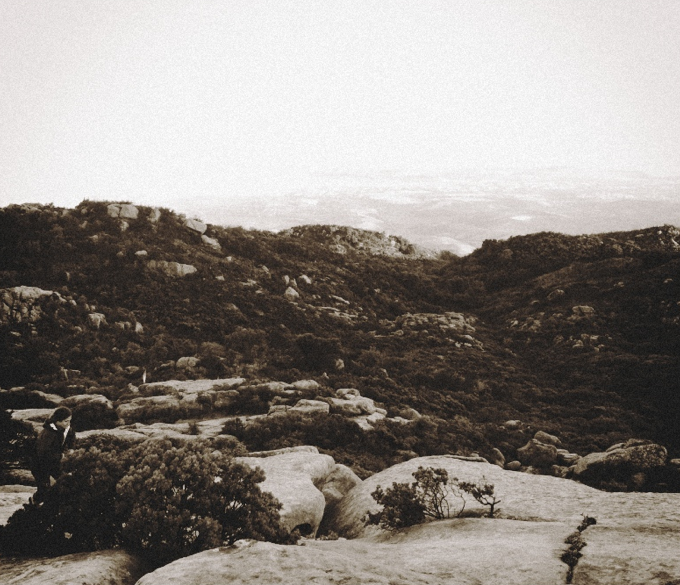
when the clouds like milk in water billow and spill
down the low places of the mountains
and the late sun light is too smooth to believe,
I am a student of movements of the heart.
when I am bestowed a life of co-toil in worthy soil
with kin closer than blood by choice and not by choice,
and wake every day springing from my floor
ready to do what I was built to do,
as a pelican must feel when it sees its wings work on the lift of wind by the crest of waves at the shore, I am a student,
when a best friend is committed to raise too much money
for too high a mountain and kids too burdened with chains they did not fasten,
and a best friend shares a cigarette with me to confess his sins and
make me feel less alone,
I am a student of movements of the heart,
for they are neither joy nor sorrow,
but one part longing, one part hunger, another thirst,
and a space in my chest and fingers and knees,
that makes me wish to be barefoot,
to burst into mist and mingle there
where I have no body but all of it at once.
Monday, June 6, 2011
Critics as creators
There are critics,
and there are creators,
and so often, I am a critic of critics and a fan of creators,
but there are critics who are creators, because they see the world around them, assimilate it, and hold it up as something that can be grasped. I like them.
“Many films diminish us. They cheapen us, masturbate our senses, hammer us with shabby thrills, diminish the value of life. Some few films evoke the wonderment of life’s experience, and those I consider a form of prayer. Not prayer “to” anyone or anything, but prayer “about” everyone and everything. I believe prayer that makes requests is pointless. What will be, will be. But I value the kind of prayer when you stand at the edge of the sea, or beneath a tree, or smell a flower, or love someone, or do a good thing. Those prayers validate existence and snatch it away from meaningless routine.”
Subscribe to:
Posts (Atom)